IF YOU ENJOY SR AND FIND IT USEFUL WOULD YOU PLEASE DONATE
When I began Schwartzreport my purpose was to produce an entirely fact-based daily publication in favor of the earth, the inter-connectedness and interdependence of all life, democracy, equality for all, liberty, and things that are life-affirming. Also, to warn my readers about actions, events, and trends that threaten those values. Our country now stands at a crossroads, indeed, the world stands at a crossroads where those values are very much at risk and it is up to each of us who care about wellbeing to do what we can to defend those principles. I want to thank all of you who have contributed to SR, particularly those of you who have scheduled an ongoing monthly contribution. It makes a big difference and is much appreciated. It is one thing to put in the hours each day and to do the work for free, but another to have to cover the rising out-of-pocket costs. For those of you who haven’t done so, but read SR regularly, I ask that you consider supporting it.
David Badash, Senior Editor - New Civil Rights Movement
Stephan:
What I have taken away this week from the coverage of the Supreme Court is how corrupt, fascist, and anti-women, the male clique of the Supreme Court has become. These are not justices interested in the law and the wellbeing of American society. These men are political hacks who believe they themselves are above the law, and have the power to determine what the law means and how it should be enforced.
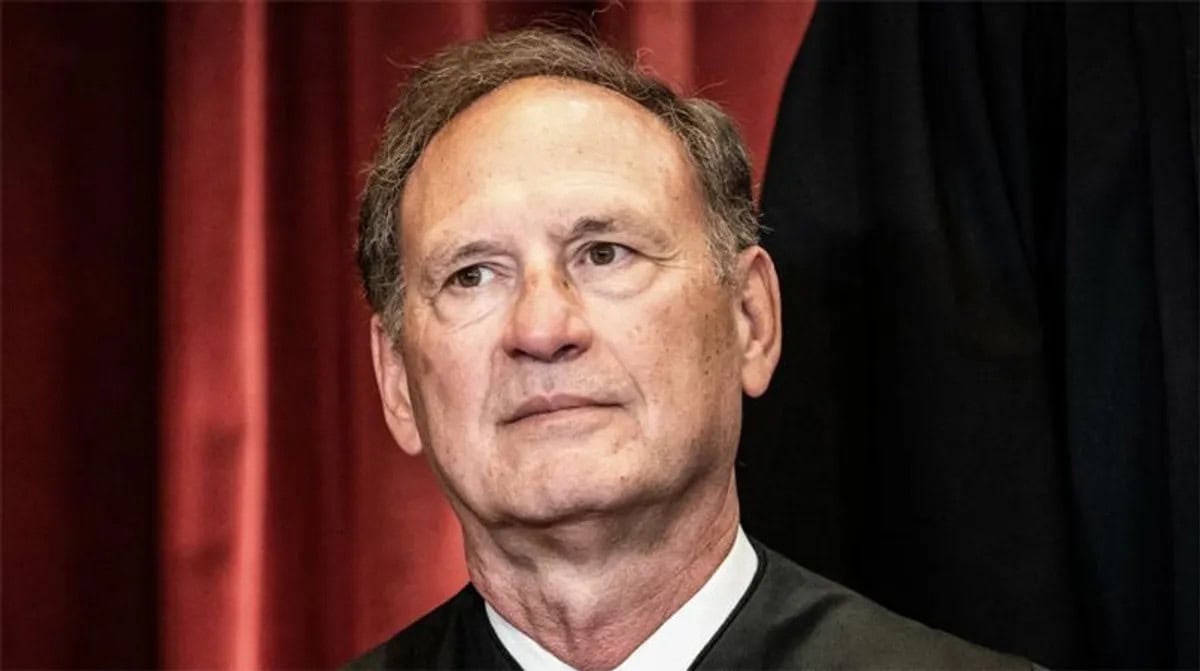
Corrupt christofascist Associate Justice Samuel Alito
The U.S. Supreme Court heard oral arguments in a case centered on the question, can the federal government require states with strict abortion bans to allow physicians to perform abortions in emergency situations, specifically when the woman’s health, but not her life, is in danger?
The 1986 federal Emergency Medical Treatment and Active Labor Act (EMTALA), signed into law by Republican President Ronald Reagan, says it can. The State of Idaho on Wednesday argued it cannot.
U.S. Solicitor General Elizabeth Prelogar, The Washington Post’s Kim Bellware reported, “made a clear delineation between Idaho law and what EMTALA provides.”
“In Idaho, doctors have to shut their eyes to everything except death,” Prelogar said, according to Bellware. “Whereas under EMTALA, you’re supposed to be thinking about things like, ‘Is she about to lose her fertility? Is her uterus going to become incredibly scarred because of the bleeding? Is she about to undergo the possibility of kidney failure?’ ”
Attorney Imani Gandy, an award-winning journalist and Editor-at-Large for Rewire News Group, highlighted an issue […]
South Dakota has a population in 2024 of just 858,469, less than a third of the population of Seattle, Washington, and they chose the loathsome TCP/Republican Kristi Noem, who recently garnered a lot of attention for shooting a puppy she said she “hated”, to be their governor. She also thinks women or girls who are raped or the victims of incest should be compelled to carry the baby to term. Tells you a lot about the people of South Dakota, I am sorry to say. I wouldn’t want to be a fertile woman or a pubescent girl living in that state. And I suspect OB/GYN physicians will be leaving the state for fear of being put in prison and losing their medical licenses. Just another Red State story, notable mostly because the governor is, herself, a woman. The Great Schism Trend particularly on the abortion issue is really splitting us into two countries.
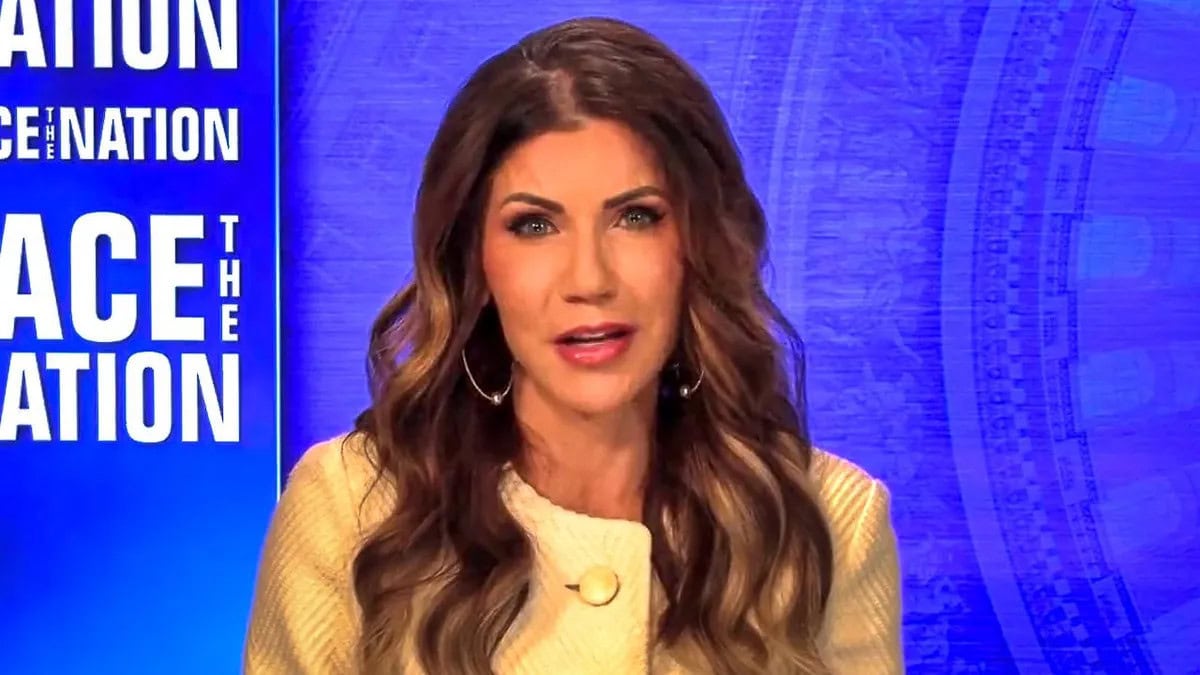
TCP Republican Governor Kristi Noem of South Dakota. Credit: CBS/screen grab
South Dakota Gov. Kristi Noem (R), a possible vice presidential candidate, called rape and incest exceptions for abortion a “tragedy.”
While speaking to Dana Bash on CNN Sunday, Noem was asked if she supported her state’s law, which does not provide exceptions for rape, much like Arizona’s Civil War-era anti-abortion law.
“Our law today allows an exception to save the life of the mother, but the people in South Dakota will decide what their laws look like,” Noem explained.
“What do you think it should look like?” Bash pressed, but Noem dodged the question, saying she would enforce her state’s laws.
The CNN host pushed again for an answer.
“Do you think there should be exceptions for rape and incest, for example?” Bash asked.
“That’s what’s different, Dana, is that I’ve constantly looked, and we rely in South Dakota on the fact that I’m pro-life and we have a law that says that there is an exception for the […]
Jamelle Bouie asks, “Trump has asked the Supreme Court if he is, in effect, a king. And at least four members of the court, among them the so-called originalists, have said, in essence, that they’ll have to think about it.” I agree with what he has said. What I heard yesterday is the christofascist clique on the court actually do support the president as a king above the law. You also hear his attorneys spouting a Benjamin Franklin quote again and again. Anyone who actually knows anything about Franklin;s views knows that Franklin himself would be appalled at the misusage of this fragment of his statement they are using out of context.
Donald Trump’s claim that he has absolute immunity for criminal acts taken in office as president is an insult to reason, an assault on common sense and a perversion of the fundamental maxim of American democracy: that no man is above the law.
More astonishing than the former president’s claim to immunity, however, is the fact that the Supreme Court took the case in the first place. It’s not just that there’s an obvious response — no, the president is not immune to criminal prosecution for illegal actions committed with the imprimatur of executive power, whether private or “official” (a distinction that does not exist in the Constitution) — but that the court has delayed, perhaps indefinitely, the former president’s reckoning with the criminal legal system of the United States.
In delaying the trial, the Supreme Court may well have denied the public its right to know whether a former president, now vying to be the next president, is guilty of trying to subvert the sacred process of presidential succession: the peaceful transfer of power from one faction to another that is the essence of representative democracy. It is a process so vital, and so precious, that its first […]
Yet another Great Schism Trend sad story about a declining Red State. Alabama already has a semi-literate population and awful social outcome data on everything from childcare to racism, and they are about to make things worse. They are attacking not just their public and school libraries, they are also threatening librarians. The result: greater illiteracy, greater ignorance, fewer librarians. Welcome to Alabama.
Jemison Library – City of Jemison Alabama Credit: Jemison Library
MONTGOMERY, ALABAMA — Alabama lawmakers on Thursday advanced legislation that could see librarians prosecuted under the state’s obscenity law for providing “harmful” materials to minors, the latest in a wave of bills in Republican-led states targeting library content and decisions.
The Alabama House of Representatives voted 72-28 for the bill that now moves to the Alabama Senate. The legislation comes amid a soaring number of book challenges — often centered on LGBTQ content — and efforts in a number of states to ban drag queen story readings.
“This is an effort to protect children. It is not a Democrat bill. It’s not a Republican bill. It’s a people bill to try to protect children,” Republican Rep. Arnold Mooney, the bill’s sponsor, said during debate.
The Alabama bill removes the existing exemption for public libraries in the state’s obscenity law. It also expands the definition of prohibited sexual conduct to include any “sexual or gender oriented conduct” at K-12 public schools or public libraries that “exposes minors to […]
A woman who told me she has been reading SR for 20 years sent me this article telling me, “You cover trends, but this is a trend I haven’t seen you say a word about, but I live in Texas and I see this trend blossoming everywhere.” I read the piece and did some research on it in the conservative media, and realized she is right. I find it hard to believe this kind of thinking is taking power amongst conservative women, but apparently it is.
Credit: Paige Vickers / Vox / Getty
In February, America’s most prominent conservative activist declared his opposition to having sex for fun.
In a post on X, the “anti-woke” crusader Christopher Rufo wrote, “‘Recreational sex’ is a large part of the reason we have so many single-mother households, which drives poverty, crime, and dysfunction. The point of sex is to create children—this is natural, normal, and good.”
Much gawking at Rufo’s grimly utilitarian take on sex ensued. Yet the firestorm largely ignored the woman whose anti-birth-control tirade had ignited it.
Rufo’s remarks were sparked by a video of a 2023 Heritage Foundation panel. In that clip, a bespectacled British woman details the supposed ravages of both oral contraception and the sexual culture that it birthed. She claims that the normalization of birth control has condemned women to higher rates of mental illness while offering them little in recompense beyond the freedom to endure “loveless and sometimes extremely […]
Mekela Panditharatne, Counsel for the Brennan Center’s Elections & Government Program - Brennan Center for Justice
Stephan:
I am increasingly concerned that AI misinformation is going to destroy a fair election in November. Here is an article describing what I mean but, happily, it also offers some solutions. We will have to see if the President, Congress, or state legislatures take this issue seriously.
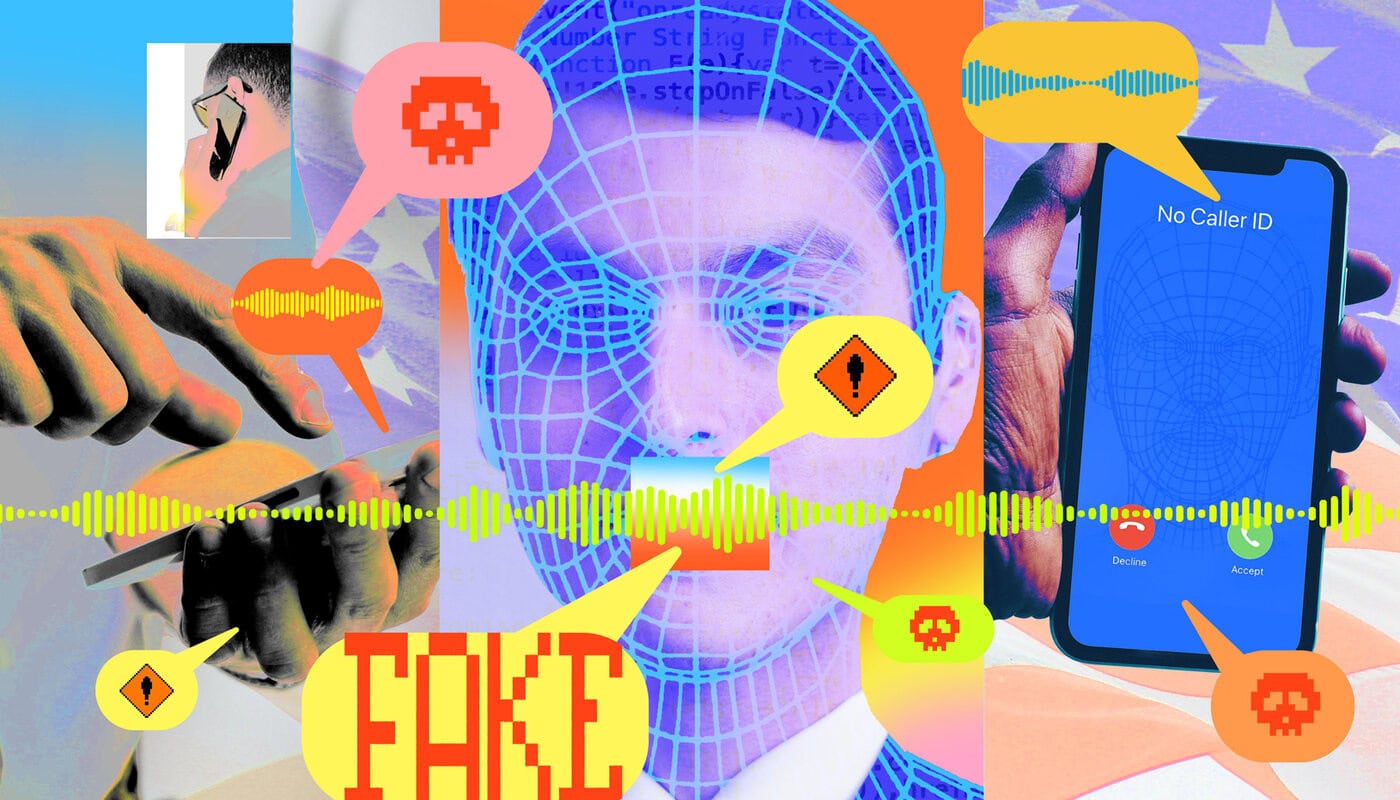
Illustration by Chris Burnett
On the eve of the 2024 New Hampshire primary, robocalls impersonating President Joe Biden counseled voters against partaking in a write-in campaign supporting Biden, urging them to “save your vote” for the general election. It was the first known instance of the deployment of voice-cloning artificial intelligence at significant scale to try to deter voters from participating in an American election. A political operative later admitted to commissioning the scheme; creating the fake audio reportedly cost just $1 and took less than 20 minutes. Similar attempts are almost certain to plague future elections as the rapid uptake and development of generative AI tools continue apace.
This phenomenon is not entirely new — vote suppression through disinformation has a long provenance in the United States. Since Black Americans and other Americans of color gained the formal right to vote, malefactors committed acts of terror to intimidate voters and pressed for restrictive election […]
Benjamin Netanyahu is destroying Israel’s status in the world, and creating massive anti-semitism in the U.S. and other countries. Look at the pro-Palestinian demonstration videos on the news on most channels, and consider the effect it is having on major prestige universities. I wondered what effect, as the high school year is ending, this is having on college applications. People have a hard time apparently making the distinction between Israel and Judaism as a religion. This is what I found. It may take as long as a generation before Israel becomes a respected nation again. Netanyahu is as big a disaster for Israel as Trump is for the United States, and both are racist fascists.
Scott Katz, a sophomore sports management major from Pennsylvania, sits in his dorm room at Elon University in North Carolina. Credit: Veasey Conway / The Free Press
The recent wave of violent protests and arrests at elite universities like Yale and Columbia have only confirmed for Scott Katz that he made the right decision to attend Elon University. The North Carolina college, where he is currently wrapping up his sophomore year, is a long way from his hometown of Lafayette Hill, the predominantly liberal Philadelphia suburb where the average home costs $610,000.
Katz, who is Jewish, says the antisemitism that’s increasingly visible at colleges nationwide—especially in the Ivy League, and other elite institutions like Stanford and Berkeley—hasn’t even touched his campus.
“I haven’t been affected by it at all,” Katz told me. “I definitely feel very safe on campus regarding my religion.”
He notes that Elon was one of only two universities in the country to get an A grade from the Anti-Defamation League for its policies protecting Jewish students against hate. (The other is […]
I watched the reporting on Trump’s attorneys presenting his case for immunity. My main takeaway was the corruption and unethical quality of the conservative majority on the Supreme Court. Just start with Clarence Thomas not recusing himself in a trial over incidents in which is wife was a significant player. Or Samuel Alito’s comments. In my opinion, there is a desperate need to change the Supreme Court, both in terms of ethical standards, and tenure.
U.S. Supreme Court Justice Samuel Alito complained Thursday about the concept that a “special” former officeholder like Donald Trump could be expected to be “subject to the criminal laws just like anybody else.”
Alito made the remarks to special counsel attorney Michael Dreeben during oral arguments in Trump’s presidential immunity appeal to the high court. Trump’s attorneys had argued the former president could not be charged with election interference because the office gave him immunity.
“Well, Mr. Dreeben, do you really, I mean, the presidents have to make a lot of tough decisions about enforcing the law, and they have to make decisions about questions that are unsettled, and they have to make decisions based on the information that’s available,” Alito said.
“Do you really, did I understand you to say, well, you know, if he makes a mistake, he makes a mistake. He’s subject […]